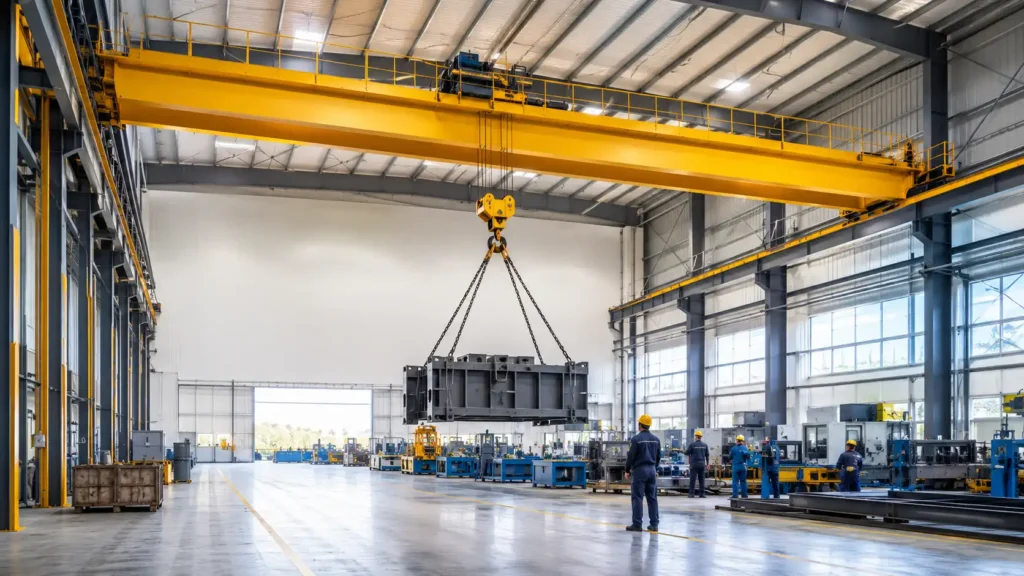
Choosing the right Overhead Crane is important for improving factory lifting efficiency, production safety, and long-term equipment reliability. This guide explains how to select a suitable overhead crane based on lifting capacity, span, lifting height, working environment, crane type, and project requirements.
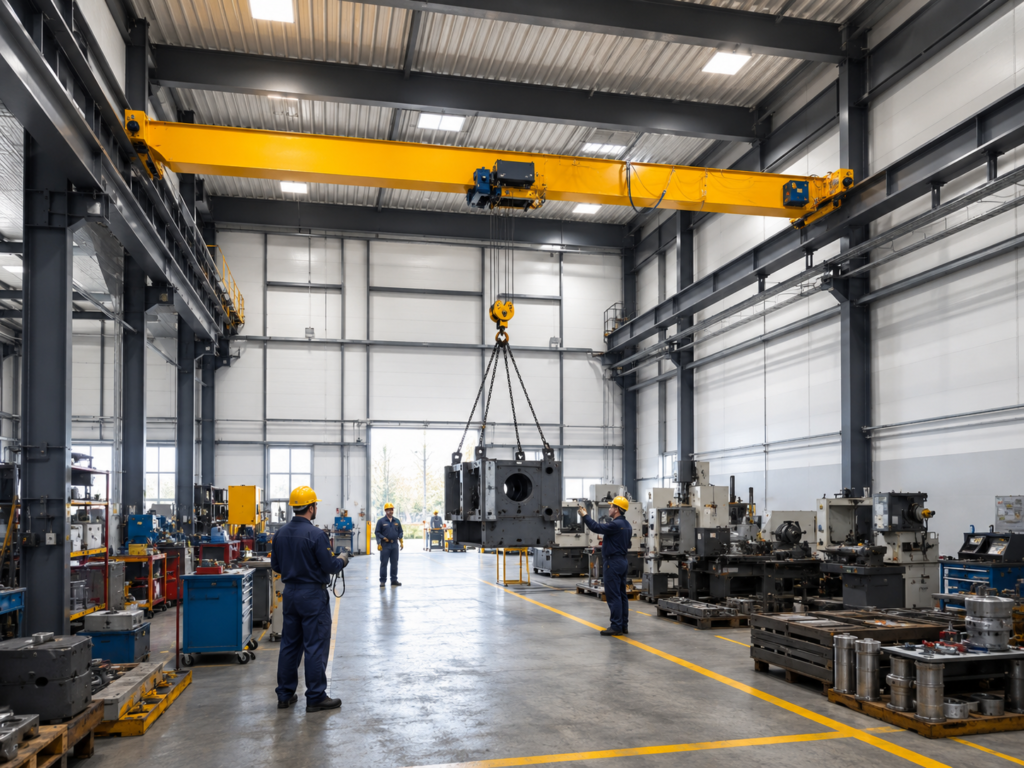
1. Why Choosing the Right Overhead Crane Matters
A suitable Overhead Crane can make daily production smoother and safer. It helps workers move heavy materials more efficiently and reduces the risk of damage during lifting and transportation.
For many factories, the crane is used every day. Once the wrong model is selected, it may affect the entire production process. For example, if the lifting capacity is too low, the crane cannot handle the required load. If the lifting height is not enough, it may limit the movement of materials. If the structure does not match the workshop layout, installation and operation can become difficult.
That is why selecting an Overhead Crane should always be based on actual working conditions, not only on price.
2. Confirm the Required Lifting Capacity
Lifting capacity is the first factor to confirm when choosing an Overhead Crane. It refers to the maximum weight the crane needs to lift during operation.
Before selecting the crane, you should clearly know:
- What materials will be lifted?
- What is the maximum load weight?
- How often will the crane be used?
- Will the production capacity increase in the future?
- Is there any need for extra safety margin?
For example, if your factory usually lifts loads close to 5 tons, you should not only consider a standard 5-ton crane. It is better to evaluate the actual working frequency, load stability, and future production needs before making a decision.
A professional Overhead Crane supplier can help you choose a suitable lifting capacity based on your real project conditions.
3. Check the Span and Lifting Height
The span and lifting height directly affect whether the Overhead Crane can be installed and used properly in your workshop.
Crane span refers to the distance between the two runway rails. It usually depends on the width of the workshop or the required working area.
Lifting height refers to the vertical distance from the ground to the highest position the hook can reach. It depends on the height of the workshop, the size of the materials, and the lifting requirements.
Before purchasing an Overhead Crane, you should provide the following information:
- Workshop width
- Workshop height
- Rail height
- Required lifting height
- Working area layout
- Installation space
- Existing steel structure conditions
If your factory has limited space, a compact Overhead Crane design or a suitable electric hoist configuration may be more practical.
4. Choose the Right Type of Overhead Crane
Different types of Overhead Crane are suitable for different lifting needs. Choosing the correct crane type can help reduce costs and improve working efficiency.
Single Girder Overhead Crane
A Single Girder Overhead Crane is commonly used in light and medium-duty lifting applications. It has a simple structure, lower investment cost, and is easy to install and maintain.
It is suitable for:
- Small and medium workshops
- Warehouses
- Assembly lines
- General manufacturing plants
- Light to medium material handling
For many factories, a single girder Overhead Crane is a cost-effective choice.
Double Girder Overhead Crane
A Double Girder Overhead Crane is suitable for heavier loads, larger spans, and higher working frequency. Compared with a single girder crane, it provides stronger load capacity and better stability.
It is commonly used in:
- Heavy machinery manufacturing
- Steel processing plants
- Large industrial workshops
- High-frequency production lines
- Heavy material handling projects
If your project requires heavy lifting or long-term continuous operation, a double girder Overhead Crane may be more suitable.
Electric Hoist Overhead Crane
An electric hoist Overhead Crane is often used for general lifting tasks. It is compact, practical, and suitable for many factory environments.
This type of crane is suitable for customers who need reliable lifting performance with a relatively simple structure and lower operating cost.
Customized Overhead Crane
Some projects require special designs due to limited space, special materials, high temperature, outdoor use, or hazardous environments. In these cases, a customized Overhead Crane solution may be necessary.
Customization can help the crane better match your actual production needs.
5. Consider the Working Environment
The working environment plays an important role in Overhead Crane selection. A crane used in a normal warehouse is different from one used in a steel plant, chemical workshop, or outdoor yard.
Before choosing an Overhead Crane, you should consider:
- Indoor or outdoor use
- Temperature and humidity
- Dust level
- Corrosive environment
- Explosion-proof requirements
- Working frequency
- Power supply conditions
- Maintenance space
For outdoor applications, anti-corrosion treatment, rain protection, and wind resistance may be required. For chemical or hazardous areas, explosion-proof configurations should be considered. For high-frequency operations, stronger motors, brakes, and electrical systems may be needed.
A suitable Overhead Crane should match both the lifting task and the working environment.
6. Focus on Safety and Quality Configuration
Safety is always a key factor when purchasing an Overhead Crane. Since the crane is used to lift heavy materials, stable performance and reliable safety devices are very important.
When evaluating an Overhead Crane, buyers should pay attention to:
- Steel structure quality
- Hoist and motor performance
- Brake system
- Limit switch
- Overload protection
- Electrical control system
- Hook and wire rope quality
- Anti-corrosion treatment
- Factory testing before delivery
High-quality components can reduce failure rates, extend equipment service life, and improve safety during daily operation.
For B2B buyers, distributors, contractors, and industrial project purchasers, stable quality is especially important because it directly affects long-term customer satisfaction.
7. Why Customization Matters for an Overhead Crane
Every factory has different production conditions. Even if two customers both need a 10-ton Overhead Crane, their workshop span, lifting height, working frequency, and installation conditions may be completely different.
That is why customization is often important.
A customized Overhead Crane solution may include:
- Lifting capacity
- Span
- Lifting height
- Crane speed
- Hoist type
- Control method
- Power supply system
- Safety protection
- Explosion-proof design
- Outdoor protection
- Special structure design
Compared with a standard model, a customized Overhead Crane can fit your workshop better and improve long-term working efficiency.
8. Choose a Reliable Overhead Crane Supplier
Choosing the right supplier is just as important as choosing the right crane model. A reliable Overhead Crane supplier should not only provide equipment, but also help customers analyze their working conditions and recommend a suitable solution.
A professional supplier should provide:
- Crane model selection support
- Technical drawing and parameter confirmation
- Customized configuration options
- Quality inspection before delivery
- Export packaging support
- International shipping support
- Installation and operation guidance
- After-sales service support
For overseas buyers, clear communication and export experience are very important. Working with an experienced Overhead Crane supplier can reduce purchasing risks and make the whole process smoother.
ASCENT MECHANICAL provides overhead crane, electric hoist, gantry crane, explosion-proof crane, and customized lifting equipment solutions for different industrial applications.
9. Conclusion
Choosing the right Overhead Crane requires careful consideration of lifting capacity, span, lifting height, crane type, working environment, safety configuration, and customization needs.
Before purchasing, it is better to prepare the following information:
- Required lifting capacity
- Workshop span
- Lifting height
- Working frequency
- Material type
- Indoor or outdoor use
- Power supply condition
- Special working environment
With this information, a professional supplier can recommend a more suitable Overhead Crane solution for your factory.